Renting is availability across time, not a stock count
A shop asks how many are left. A hire business asks which unit is free, for which window, and when it comes back. Stock sold decrements once and is gone. A rental asset leaves, returns, gets checked and becomes available again, minus the time it takes to clean, inspect, charge or transport it. Every screen in a rental system follows from that one difference.
So the model to agree first is a sequence of states rather than a list of features: requested, reserved, paid or deposit held, collected, in possession, returned, inspected, then released back into availability with any adjustments settled. Naming those transitions is most of the scope, because each one is a moment where an asset or an amount of money can quietly go missing.

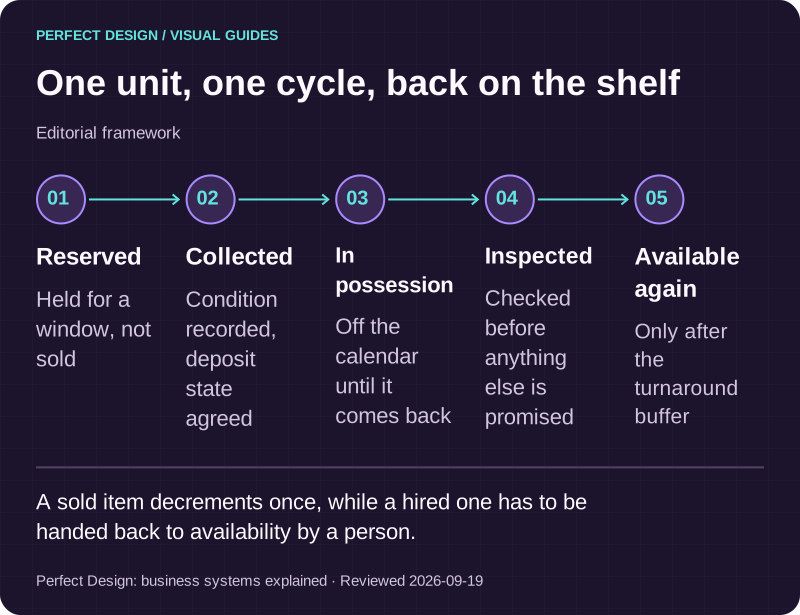
One unit, one cycle, back on the shelf
Editorial framework. A sold item decrements once, while a hired one has to be handed back to availability by a person.
Basis: Perfect Design: business systems explained. Reviewed .
Read the graphic as text
- Reserved. Held for a window, not sold
- Collected. Condition recorded, deposit state agreed
- In possession. Off the calendar until it comes back
- Inspected. Checked before anything else is promised
- Available again. Only after the turnaround buffer
When you need rental modelling rather than a booking calendar
Appointment scheduling sells somebody's time, and nothing leaves the building. If your bookable thing is a room, a table or a slot that cannot come back damaged, booking and scheduling is the right model and the cheaper build. Hire adds a physical asset in a customer's hands, which brings a different set of things to keep track of.
- Identified units with asset tags and their own service history, or an interchangeable pool where any unit will do.
- A turnaround buffer between bookings for cleaning, inspection, charging or transport.
- A condition record at collection and at return, made from evidence both sides have seen.
- A deposit or pre-authorisation, with an agreed rule about what it covers.
- Accessories and consumables that go out with the unit and are supposed to come back with it.

Online banking carries Malaysian checkouts
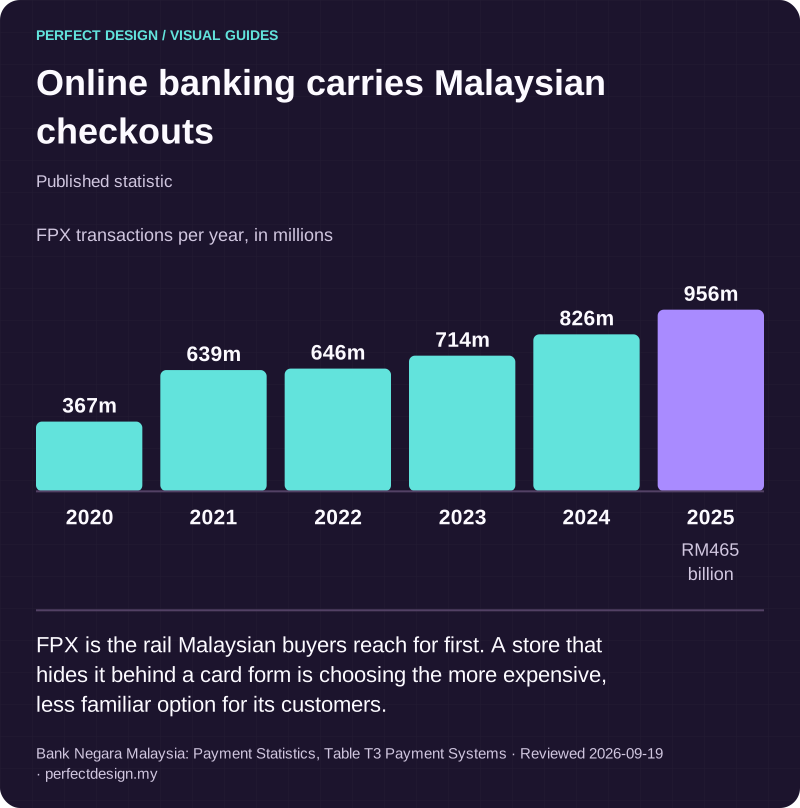
Published statistic. FPX is the rail Malaysian buyers reach for first. A store that hides it behind a card form is choosing the more expensive, less familiar option for its customers.
Source: Bank Negara Malaysia: Payment Statistics, Table T3 Payment Systems. Reviewed .
Read the graphic as text
- 2020: 367m.
- 2021: 639m.
- 2022: 646m.
- 2023: 714m.
- 2024: 826m.
- 2025: 956m. RM465 billion
Chart scale: FPX transactions per year, in millions.
Availability, buffers and the double booking
Availability here is a calendar per unit, not a number in a box. Two bookings that look neatly separate to a customer can still collide for you, because the buffer between them is part of the booking even though nobody outside sees it. Maintenance windows, servicing and transport time occupy that same calendar and have to be bookable in their own right.
Then decide whether you quote from a pool and assign a specific unit at collection, or commit to a named unit at the moment of booking. Both are workable and they are not interchangeable: the choice changes how availability is calculated, what happens when two requests collide, and what your staff can safely promise on the phone.
The table follows one fictional retailer hiring an identified camera kit for a three-day period with a one-day turnaround. Every role, policy and response is an assumption made for illustration, and the last column describes evidence to collect during testing rather than a result anybody has achieved.
| Workflow step | Assumed actor | Proposed system response | Exception | Acceptance evidence to collect |
|---|---|---|---|---|
| Request a rental period | Assumed customer | Check kit availability including the assumed turnaround time | Overlapping bookings require a fresh availability decision | Overlapping-period and capacity tests across two bookings of the same kit |
| Collect the kit | Assumed rental coordinator | Record the handover, the condition and any agreed deposit state | Missing parts or unmet identity requirements leave the handover incomplete | Signed-off inventory and condition records, with payment-state observations |
| Return the kit | Assumed rental coordinator | Inspect before releasing the kit for another booking | A late return or damage follows the separately agreed adjustment policy | Inspection, availability-release and deposit reconciliation records |
Deposits, condition and damage
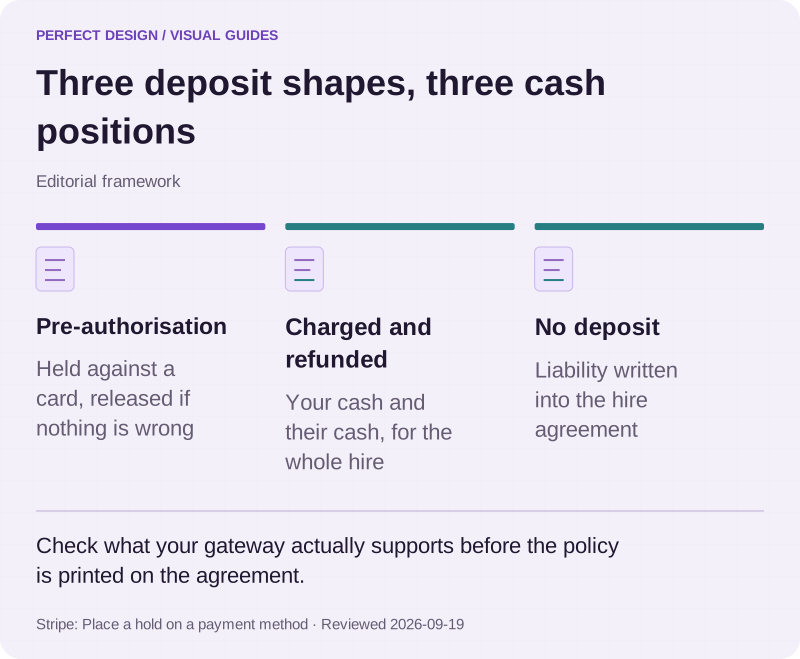
Deposits come in three shapes: an amount held against a card as a pre-authorisation, an amount charged and refunded later, or no deposit at all with the liability written into the hire agreement. They behave differently for the customer and for your cash position, and what your gateway can actually support has to be checked against its own documentation before the policy is fixed.
- What the deposit covers, and what is charged separately from it.
- When it is released, and who in your team is allowed to release it.
- How damage is assessed, by whom, and against which record.
- Photographs and notes captured at handover and at return, timestamped and visible to both sides.
Collection is also where eligibility gets checked, and that belongs in the workflow rather than in a staff member's judgement on a busy morning. Whether you need a licence sighted, an identity document recorded, a minimum age confirmed or written authority for somebody collecting on a company's behalf, the system should ask for it, record what was seen, and refuse to complete a handover without it.
A deposit argument is a relationship problem before it is a payments problem. The job of the system is to make the evidence boring: a condition record the customer saw and acknowledged at collection, so any later conversation is about a documented difference rather than two honest recollections that disagree.

Three deposit shapes, three cash positions
Editorial framework. Check what your gateway actually supports before the policy is printed on the agreement.
Basis: Stripe: Place a hold on a payment method. Reviewed .
Read the graphic as text
- Pre-authorisation. Held against a card, released if nothing is wrong
- Charged and refunded. Your cash and their cash, for the whole hire
- No deposit. Liability written into the hire agreement
The handover moments where rental businesses lose money
Very little is lost inside a hire business's booking form. It goes at the handover points, where a physical event has to become a record and nobody is sitting at a desk.
- A collection nobody recorded, so the unit still shows as available and a second customer is promised it.
- Accessories handed over without being itemised, missed at return and discovered weeks later with no way to say when.
- A return taken at the counter but never released back into availability, so bookings are refused for a unit sitting on a shelf.
- A late return nobody charged for, because the rule lived in somebody's head rather than on the agreement.
- Damage found after the next hire has started, at which point nobody can say which customer caused it.
Every one of those is a record with a timestamp and an owner, which is genuinely the fix. Make the handover fast enough on a phone that whoever is holding the kit records it while the customer is still standing there, rather than intending to do it later.

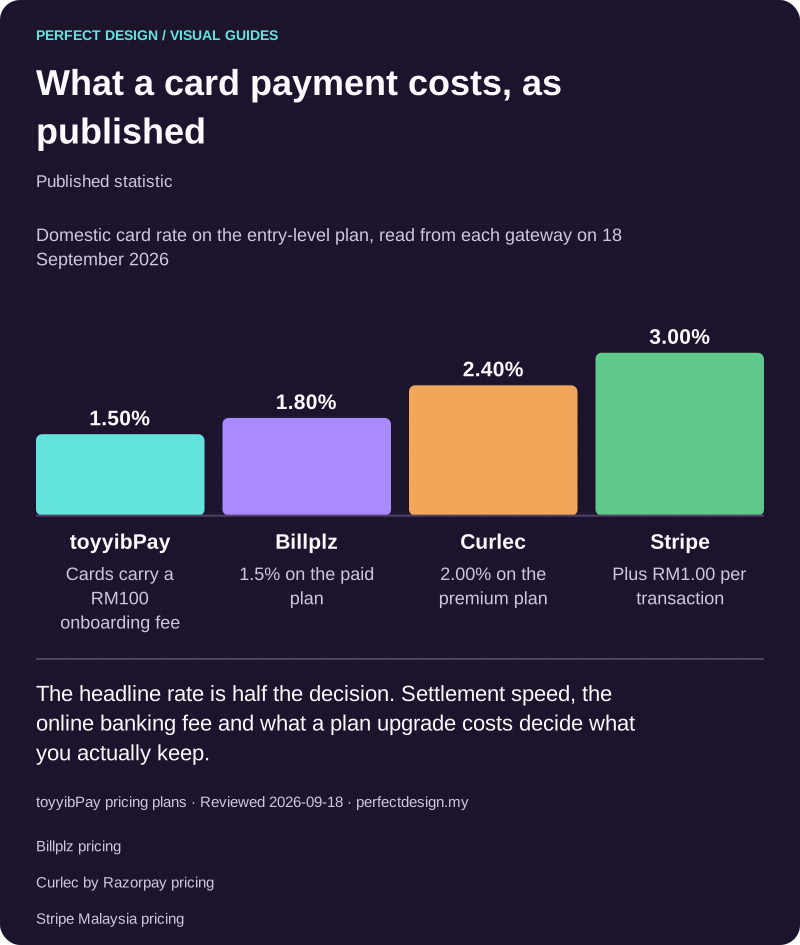
What a card payment costs, as published
Published statistic. The headline rate is half the decision. Settlement speed, the online banking fee and what a plan upgrade costs decide what you actually keep.
Source: toyyibPay pricing plans. Reviewed .
Also: Billplz pricing.
Also: Curlec by Razorpay pricing.
Also: Stripe Malaysia pricing.
Read the graphic as text
- toyyibPay: 1.50%. Cards carry a RM100 onboarding fee
- Billplz: 1.80%. 1.5% on the paid plan
- Curlec: 2.40%. 2.00% on the premium plan
- Stripe: 3.00%. Plus RM1.00 per transaction
Chart scale: Domestic card rate on the entry-level plan, read from each gateway on 18 September 2026.
Late returns, extensions and the customer waiting downstream
A late return is two problems wearing one label. There is the charge, and there is the next customer who was promised that unit. Decide the escalation in advance: the grace period, the rate after it, the point at which the next booking is moved to another unit, and the point at which somebody picks up the phone. The second half is what damages the business, and it is usually the half with no process behind it.
Extensions requested mid-hire are the same problem arriving earlier. Check the next booking before agreeing to one, and put that check in front of whoever answers the phone. An extension granted without it is a double booking your own team created.

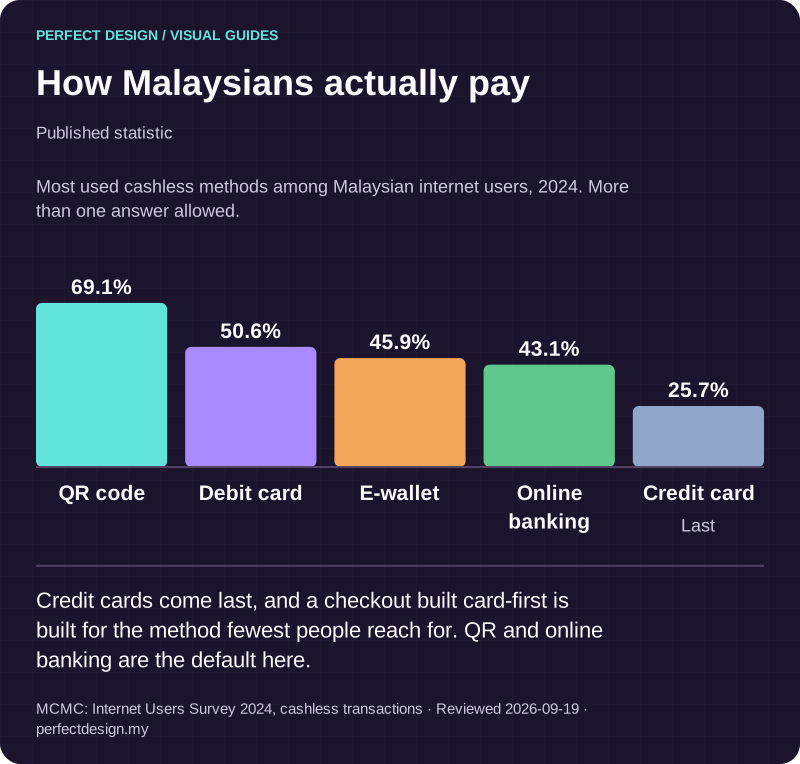
How Malaysians actually pay
Published statistic. Credit cards come last, and a checkout built card-first is built for the method fewest people reach for. QR and online banking are the default here.
Source: MCMC: Internet Users Survey 2024, cashless transactions. Reviewed .
Read the graphic as text
- QR code: 69.1%.
- Debit card: 50.6%.
- E-wallet: 45.9%.
- Online banking: 43.1%.
- Credit card: 25.7%. Last
Chart scale: Most used cashless methods among Malaysian internet users, 2024. More than one answer allowed..
Pricing that is more than a day rate
Hire pricing carries parts a product price does not: daily and weekly rates, minimum hire periods, peak dates, delivery and collection charges, damage waivers, consumables and late fees. Decide which of those are quoted online and which are confirmed by a person, because a published price your staff routinely override teaches customers not to trust the site. Decide too what is taken at booking and what is settled at collection, which is payment and checkout work.
What we have built that is relevant here
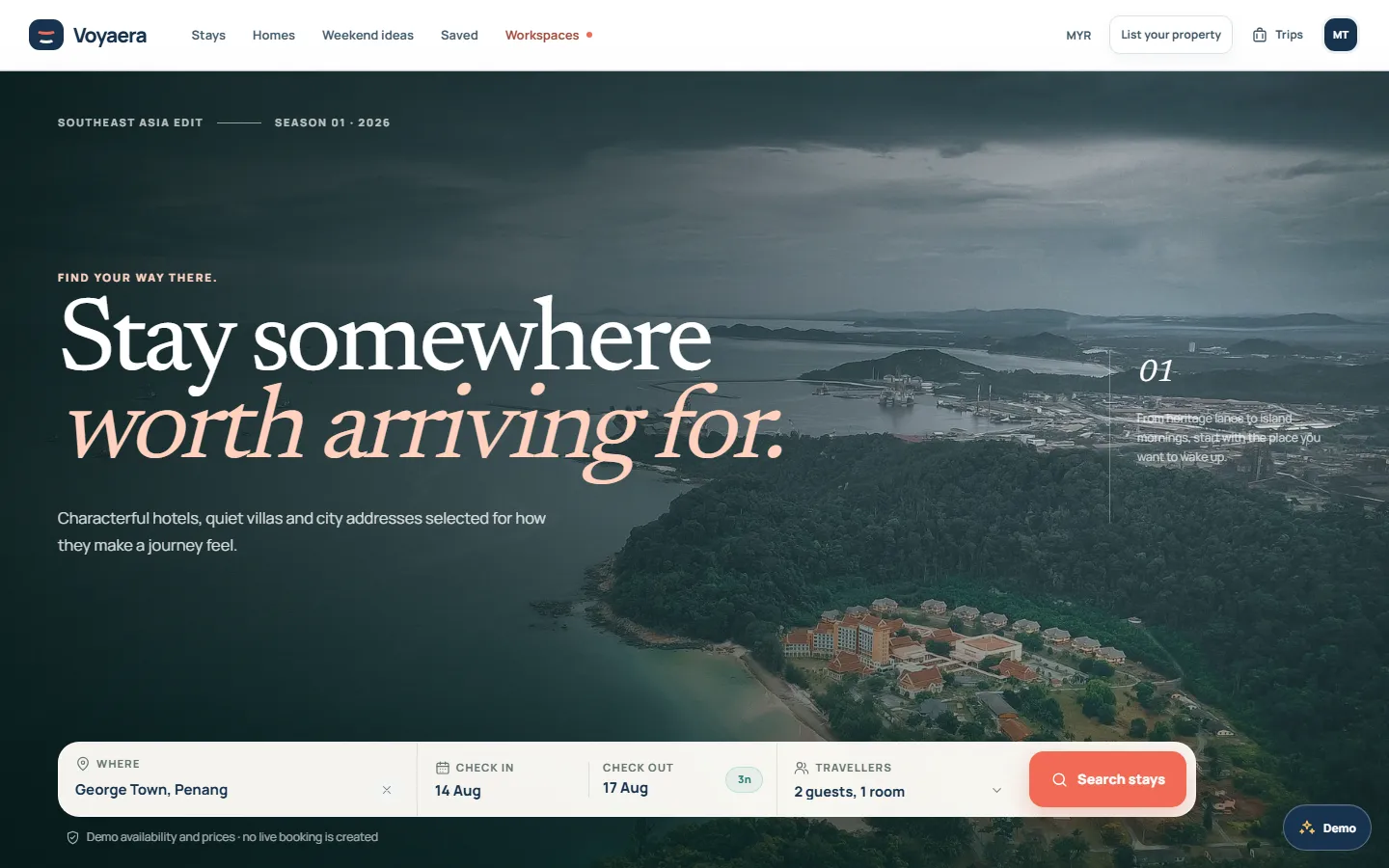
Voyaera is a concept prototype we built ourselves. It is an accommodation marketplace with eight connected roles around a single reservation, so it is not client work and it is not a hire business. It appears here because it demonstrates the machinery a rental shares with it: a timed reservation that an operation has to honour, where the customer view and the operational side read the same record instead of two systems that quietly disagree. No client outcome is implied by it.
What to settle before a build
Bring your inventory and whether units are identified or pooled, your turnaround times, and the policies you apply today for deposits, late returns, damage, extensions and cancellations. Add who performs handovers and on what device, anything that has to stay in step such as an accounting package or an existing calendar, and any constraint that cannot move. Send that as a scoped enquiry and we will tell you which parts look ready to build and which need a decision from you first.
Two more things are worth agreeing while the scope is still open: what counts as accepted, and who runs the system after launch. Acceptance for a hire build reads better as exercises than as a feature list, so an overlapping request, an incomplete handover and a damaged return each have to be demonstrated before anybody signs anything off.