

What you are actually buying in a search auction
Somebody has a problem, describes it in a search box, and you appear beside the answer. That is why paid search behaves differently from anything else you can buy. The demand already exists: you are competing for a moment you did not create, and you pay when a person clicks rather than when the advert is shown. The cost of the channel is decided less by your bid than by which searches you allow yourself to appear on.
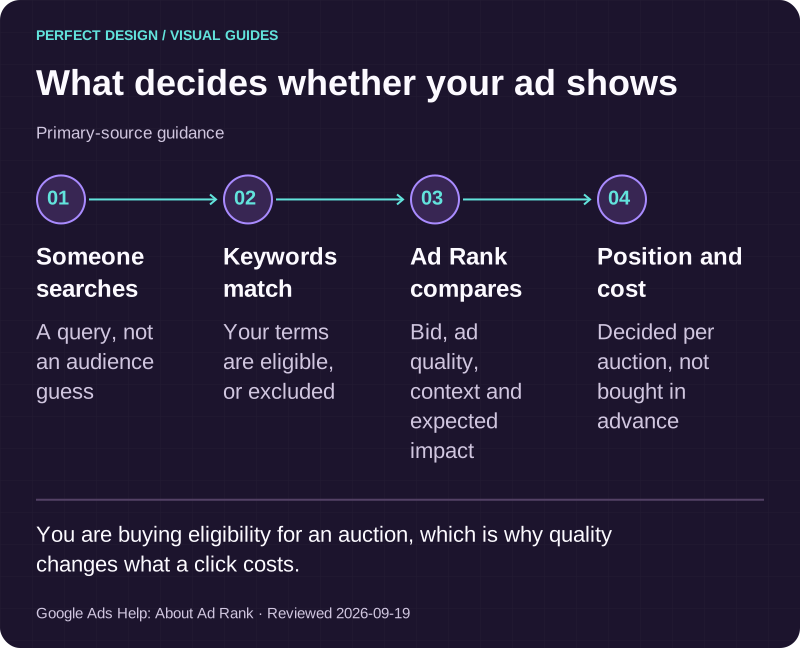
Position is not simply bought. Google describes Ad Rank as a set of values used to determine whether your ads are eligible to show and, if they are, where on the page they appear. Its listed inputs include your bid, the quality of your ads and landing page, Ad Rank thresholds, the competitiveness of the auction, the context of the search, and the expected impact of assets and ad formats. So a bigger bid does not guarantee a better position: work on the advert and its destination sits inside the same calculation as the money.

What decides whether your ad shows
Primary-source guidance. You are buying eligibility for an auction, which is why quality changes what a click costs.
Source: Google Ads Help: About Ad Rank. Reviewed .
Read the graphic as text
- Someone searches. A query, not an audience guess
- Keywords match. Your terms are eligible, or excluded
- Ad Rank compares. Bid, ad quality, context and expected impact
- Position and cost. Decided per auction, not bought in advance
Search is one campaign type. Google Ads is seven
Everything above describes Search: text ads answering a query somebody typed. It is the campaign type most Malaysian businesses start with, and most of this page is about it. It is not the whole product. Google organises advertising into campaign types and gives each one a job, and the one that fits depends on whether demand already exists, whether you have a product feed, and whether you are trying to be found or trying to be remembered.
Two of these are worth knowing about before somebody sells you one. Performance Max puts a single campaign across every Google surface and hands the targeting to Google's AI, which means less steering and a harder time telling which surface actually produced a result. Display is being folded into Demand Gen: Google opened voluntary migration in June 2026 and has said new campaigns will eventually only be creatable in Demand Gen, with remaining eligible campaigns migrated automatically. An account nobody is actively managing will have that change made for it.
| Campaign type | What Google says it does | When it is the right one |
|---|---|---|
| Search | Text ads on search results, reaching people while they are searching on Google | Demand already exists and people are describing it in words |
| Shopping | Product listings on search results and the Shopping tab, for a retailer selling inventory | You sell products and can maintain a product feed |
| Performance Max | One goal-based campaign reaching all Google Ads inventory at once | You want coverage everywhere and accept far less steering |
| Video | Video ads on YouTube and other websites | The thing has to be shown or explained, not listed |
| Demand Gen | Engagement and action across YouTube including Shorts, Discover, Gmail, Maps and the Display Network | Creating interest before anyone searches |
| Display | Visual ads across millions of websites, apps and Google properties | Being remembered, and being migrated into Demand Gen |
| App | Finding new app users and increasing sales inside an app | The product is an app, not a website |
Most Malaysian businesses should settle Search before anything else, because it is the only one where the person has already told you what they want. Google Search Ads covers that campaign type properly. If you are weighing the others, or being sold one, How Google Ads works explains the machinery underneath all of them — the auction, budgets, conversion counting and policy — without a sales pitch attached.

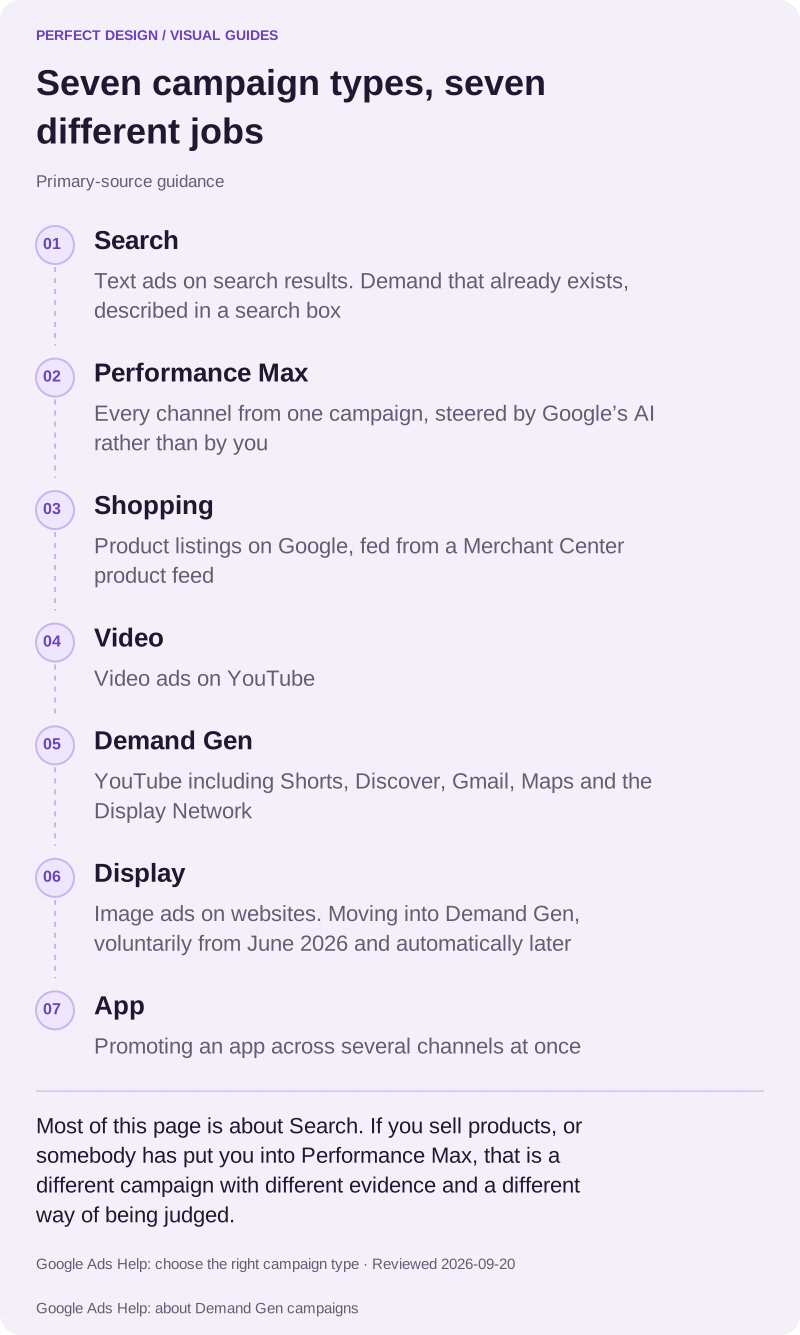
Seven campaign types, seven different jobs
Primary-source guidance. Most of this page is about Search. If you sell products, or somebody has put you into Performance Max, that is a different campaign with different evidence and a different way of being judged.
Source: Google Ads Help: choose the right campaign type. Reviewed .
Also: Google Ads Help: about Demand Gen campaigns.
Read the graphic as text
- Search. Text ads on search results. Demand that already exists, described in a search box
- Performance Max. Every channel from one campaign, steered by Google’s AI rather than by you
- Shopping. Product listings on Google, fed from a Merchant Center product feed
- Video. Video ads on YouTube
- Demand Gen. YouTube including Shorts, Discover, Gmail, Maps and the Display Network
- Display. Image ads on websites. Moving into Demand Gen, voluntarily from June 2026 and automatically later
- App. Promoting an app across several channels at once
Keywords and match types decide who ever sees you
A keyword is not a filter that fires on exact text. It is an instruction about how much interpretation you will accept, and the three options behave very differently. That single setting separates an account producing enquiries from one producing activity.
| Match type | What Google says it matches | What it does to a budget |
|---|---|---|
| Broad match | Ads may show on searches related to your keyword, which can include searches that do not contain its direct meaning | Widest reach, least steering. Useful for discovery, costly unattended |
| Phrase match | Ads may show on searches that include the meaning of your keyword, where that meaning can be implied or more specific | The middle setting. Keeps the intent, allows how people really phrase things |
| Exact match | Ads may show on searches with the same meaning or intent as the keyword, giving the most steering while reaching fewer searches | Tightest control, smallest volume. Where a proven search lives |
Most accounts we are asked to look at have the same shape: everything on broad match, no structure underneath, and money going to searches nobody would have chosen. The answer is not to ban broad match but to use it where discovery is the point, read what it matched, and promote the searches that produce enquiries into tighter groups where the advert and destination answer them directly.
Match types, the search terms report and the exclusion work that follows them are covered properly on Google Search Ads, which is the campaign type this section describes.
Negative keywords are the main cost control you have
The search terms report shows the queries that actually triggered your adverts, which is where the gap between what you meant and what Google understood becomes visible. Negative keywords are the lever you pull with it. Google describes them as a way to exclude search terms so you can focus on the keywords that matter to your customers, and suggests looking for terms similar to your keywords that cater to somebody wanting a different product.
- Negatives have their own match types. Broad is the default: Google documents that the ad will not show if the search contains all your negative terms, even in a different order. Phrase requires the same order, exact requires it with no extra words.
- Negatives do not expand. Google states they will not match close variants or other expansions, so a plural does not cover the singular and a misspelling has to be added on its own.
- Reviewing is a habit, not a launch task. New phrasings appear constantly, and an account nobody reads drifts back toward what you excluded in week one.
For a Malaysian advertiser the starting list is usually the same categories: the word free, job and salary searches, do it yourself searches, the neighbouring services you do not sell, and competitor names you have no intention of bidding against. A week of real search terms teaches you more about your category than a month of planning.

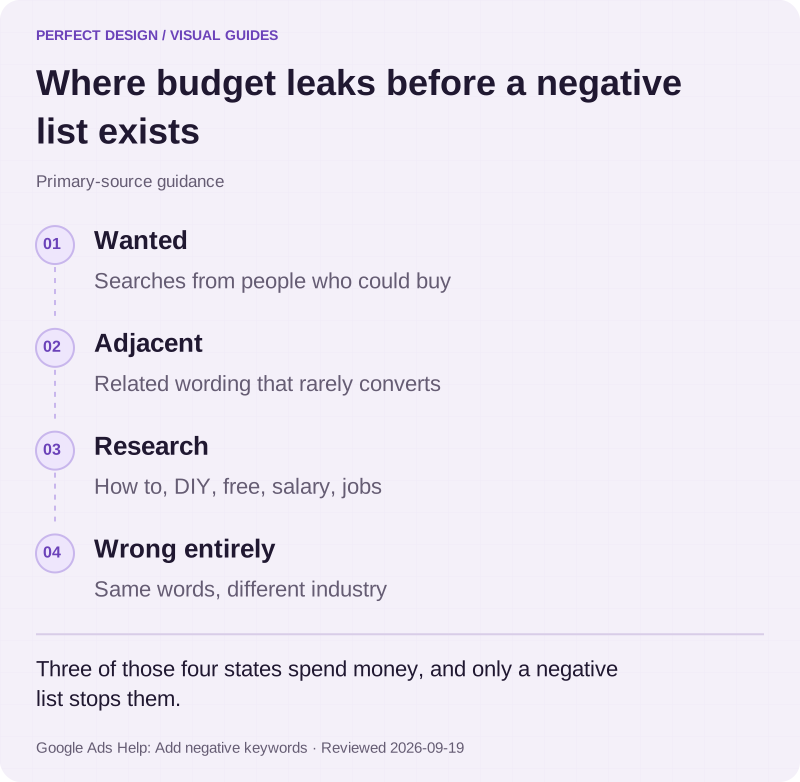
Where budget leaks before a negative list exists
Primary-source guidance. Three of those four states spend money, and only a negative list stops them.
Source: Google Ads Help: Add negative keywords. Reviewed .
Read the graphic as text
- Wanted. Searches from people who could buy
- Adjacent. Related wording that rarely converts
- Research. How to, DIY, free, salary, jobs
- Wrong entirely. Same words, different industry
Quality Score, and what it is not
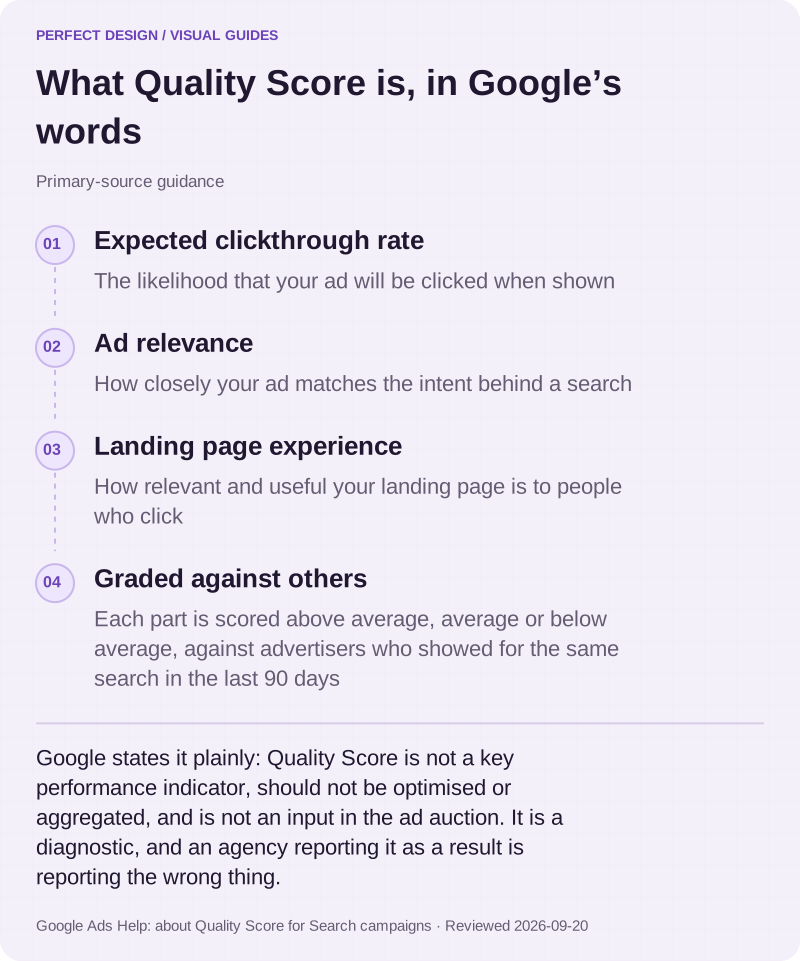
Quality Score gets discussed as a magic number. Google is plainer: it describes Quality Score as a diagnostic tool meant to give you a sense of how well your ad quality compares to other advertisers, measured on a scale of 1 to 10 at keyword level, and states that it is not an input in the ad auction.
It is still worth reading, because of what it is built from. Google lists three components: expected clickthrough rate, ad relevance, described as how closely your ad matches the intent behind a search, and landing page experience, described as how relevant and useful your landing page is to people who click your ad. Those are diagnostics for the three decisions you control: the searches you appear on, what the advert says and where it lands. A weak component says where to look, not what the fix is.

What Quality Score is, in Google’s words
Primary-source guidance. Google states it plainly: Quality Score is not a key performance indicator, should not be optimised or aggregated, and is not an input in the ad auction. It is a diagnostic, and an agency reporting it as a result is reporting the wrong thing.
Source: Google Ads Help: about Quality Score for Search campaigns. Reviewed .
Read the graphic as text
- Expected clickthrough rate. The likelihood that your ad will be clicked when shown
- Ad relevance. How closely your ad matches the intent behind a search
- Landing page experience. How relevant and useful your landing page is to people who click
- Graded against others. Each part is scored above average, average or below average, against advertisers who showed for the same search in the last 90 days
The page the click lands on is part of the campaign
Paid search fails at the destination more often than it fails in the account. Someone searches for one specific thing, an advert promises that thing, and the click lands on a homepage built to serve eleven audiences at once. The visitor now has to find their way back to what they were promised, and most will not.
The working rule is that the words in the advert should be recognisable in the first screen of the destination, which usually means a campaign page rather than a general section of the website. Landing page design covers how those are scoped, and where the wider site is the weak point, corporate website design is the other conversation. Either way the destination is website work with its own owner. Agree who makes changes to it before launch, or the campaign will eventually need an edit nobody is responsible for.

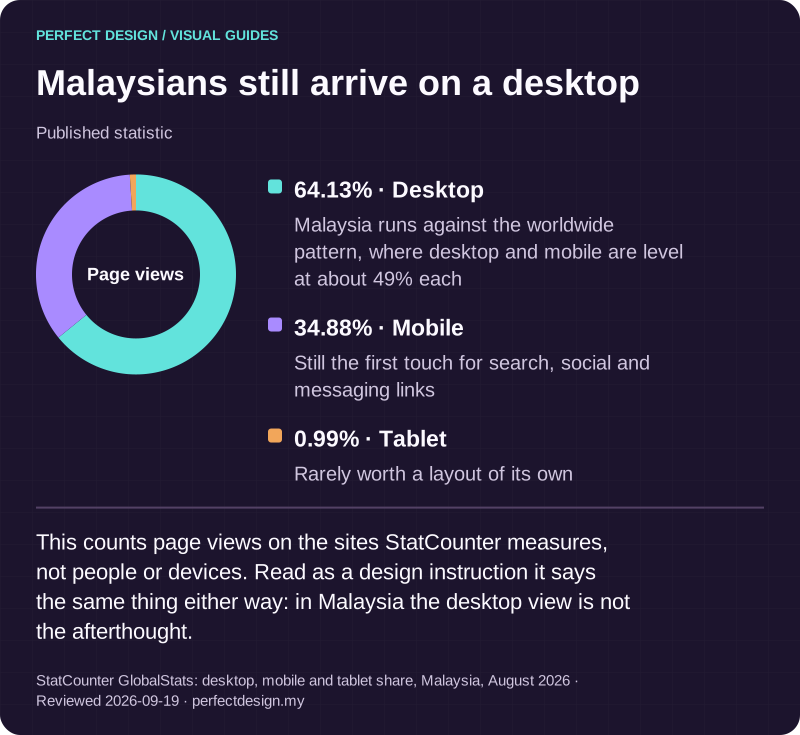
Malaysians still arrive on a desktop
Published statistic. This counts page views on the sites StatCounter measures, not people or devices. Read as a design instruction it says the same thing either way: in Malaysia the desktop view is not the afterthought.
Source: StatCounter GlobalStats: desktop, mobile and tablet share, Malaysia, August 2026. Reviewed .
Read the graphic as text
Page views
- Desktop: 64.13%. Malaysia runs against the worldwide pattern, where desktop and mobile are level at about 49% each
- Mobile: 34.88%. Still the first touch for search, social and messaging links
- Tablet: 0.99%. Rarely worth a layout of its own
Conversion tracking goes in before the spend, not after
This step gets deferred and should not be. Google's documentation is explicit that you choose what you identify as valuable, such as a purchase, a sign-up or a phone call, and that a conversion action is a specific customer activity valuable to your business, measured so the measurement can refine the campaign. Nothing decides that for you, and where nobody does, the account optimises toward clicks, which is the one thing you can buy without selling anything.
Tracking then has to be checked rather than assumed. Google notes that an unverified or inactive status is normal for a new tag and that it becomes active only once Google Ads records a first conversion or a successful test event, so putting a real submission through the real form is part of setup. Google also requires advertisers to give people clear information about the data collected on their sites and to obtain consent where law or policy requires it, which is built into the website rather than switched on in the account.
Who owns the account, the data and the spend
Your business owns the ad account, the billing profile and the data in them. Media budget is paid to the platform by you rather than through us, and where an account already exists we would normally work inside it so its history and conversion setup are not discarded. Reporting is agreed with you at the start: what the platform recorded, what it cost, what your team qualified, what is uncertain and which decision needs an owner.
When we would tell you not to run Google Ads
Search advertising only reaches demand that exists as searches. If nobody is searching for what you sell, because the category is new or the decision starts in a social feed, the budget belongs on a channel built for interruption. We manage Meta Ads across Facebook and Instagram and TikTok Ads as well as Google Ads, so the recommendation does not depend on which platform we happen to run.
Two other situations are worth naming. If enquiries already sit unanswered for days, more of them will not help, and fixing the follow-up is the cheaper project. And where interest in your category is steady rather than seasonal, paid clicks stop the moment the budget does, while SEO and, for a storefront, local SEO keep arriving. The two are not rivals: paid search shows quickly which searches turn into enquiries, and our search visibility guides set out what search reports can and cannot prove.
What to bring to a scoping conversation
Bring the offer and who is eligible for it, the page you want traffic to land on, who approves a claim in an advert, who owns changes to the website, and what counts as a genuine enquiry. That is enough for us to say what is included, what has to be built first, and whether we would recommend starting at all.