
Core systems
The parts we build again and again
Most projects are a new combination of the same proven pieces. Here is every core system we build — each one linked to the real projects that contain it, so you can see it working rather than take our word for it.
Sell & transact
Catalogues, carts and the checkout itself
Customers & bookings
How customers book, sign in and find you
Booking & scheduling
Taking bookings without the WhatsApp back-and-forth or the double-booking.
Accounts & customer portals
A logged-in area where customers and partners serve themselves instead of emailing you.
Location & store finder
Turning "where can I get this?" into directions, in two taps.
Run the business
The back office your team lives in
Admin dashboards & consoles
The screen your team lives in — where the business is actually run.
Client-editable content
You change the words and images. You cannot break the design.
CRM & integrations
Making sure every enquiry lands where your team already works.
AI & automation
Assistants and the plumbing between systems
Anything not listed here is usually still possible — these are simply the pieces we have built enough times to price and deliver quickly. Projects also carry one-off systems built specifically for them, which you will find on each project's own page.
In pictures
How these systems fit together

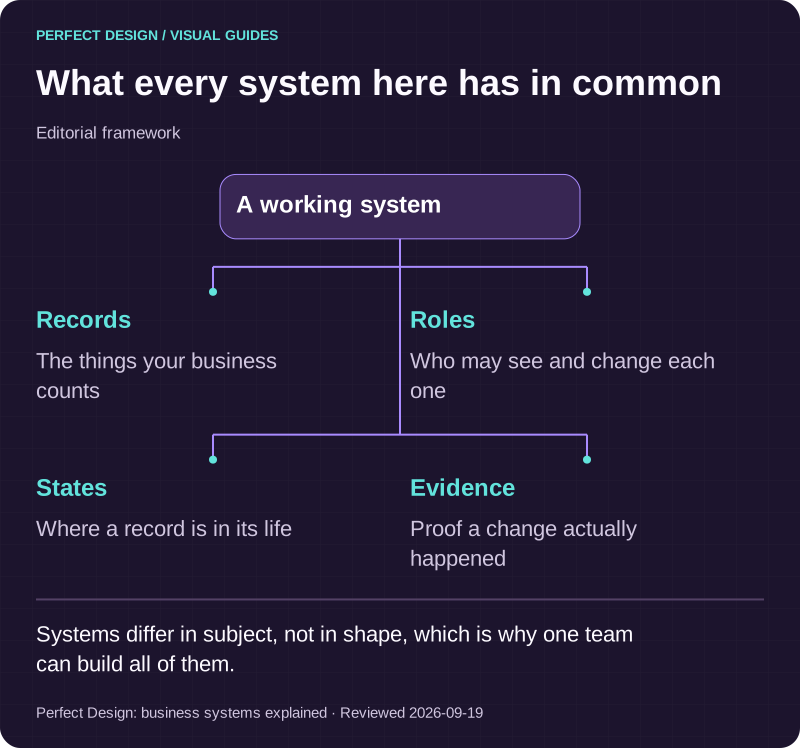
What every system here has in common
Editorial framework. Systems differ in subject, not in shape, which is why one team can build all of them.
Basis: Perfect Design: business systems explained. Reviewed .
Read the graphic as text
A working system
- Records. The things your business counts
- Roles. Who may see and change each one
- States. Where a record is in its life
- Evidence. Proof a change actually happened

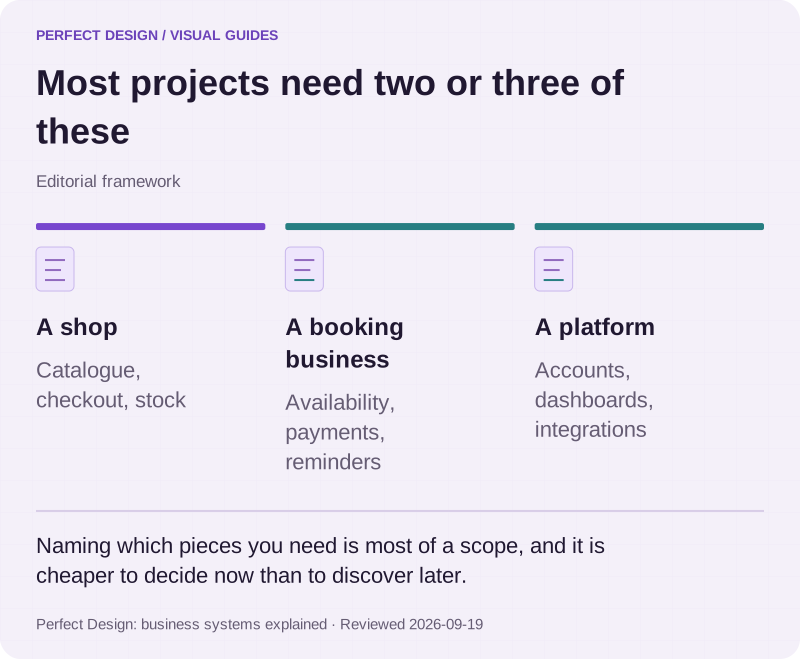
Most projects need two or three of these
Editorial framework. Naming which pieces you need is most of a scope, and it is cheaper to decide now than to discover later.
Basis: Perfect Design: business systems explained. Reviewed .
Read the graphic as text
- A shop. Catalogue, checkout, stock
- A booking business. Availability, payments, reminders
- A platform. Accounts, dashboards, integrations

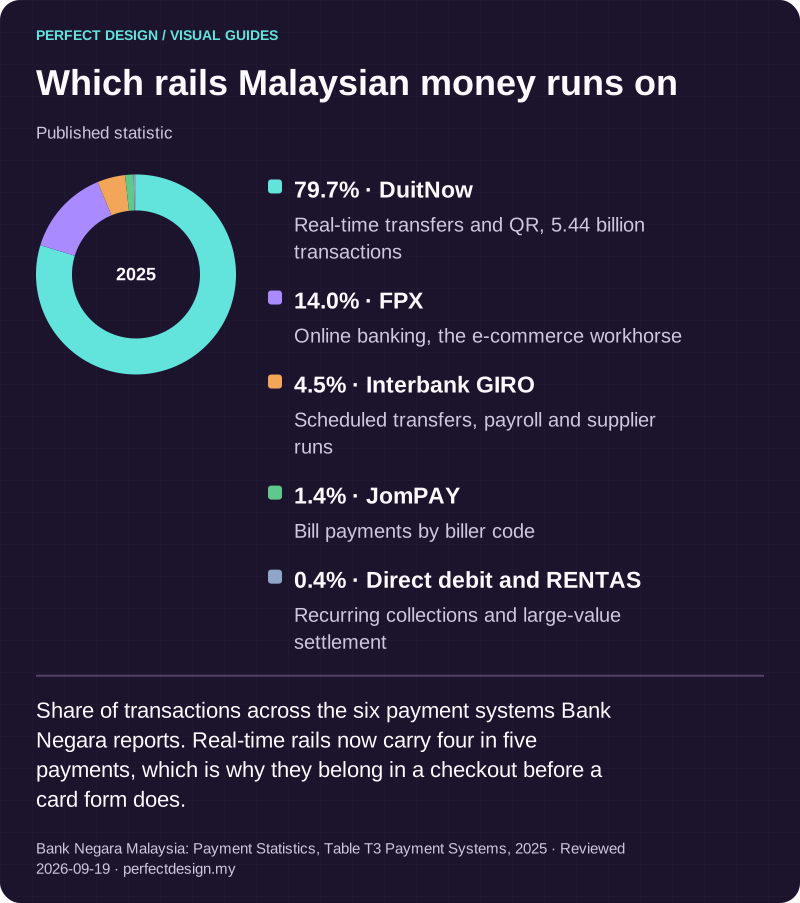
Which rails Malaysian money runs on
Published statistic. Share of transactions across the six payment systems Bank Negara reports. Real-time rails now carry four in five payments, which is why they belong in a checkout before a card form does.
Source: Bank Negara Malaysia: Payment Statistics, Table T3 Payment Systems, 2025. Reviewed .
Read the graphic as text
2025
- DuitNow: 79.7%. Real-time transfers and QR, 5.44 billion transactions
- FPX: 14.0%. Online banking, the e-commerce workhorse
- Interbank GIRO: 4.5%. Scheduled transfers, payroll and supplier runs
- JomPAY: 1.4%. Bill payments by biller code
- Direct debit and RENTAS: 0.4%. Recurring collections and large-value settlement

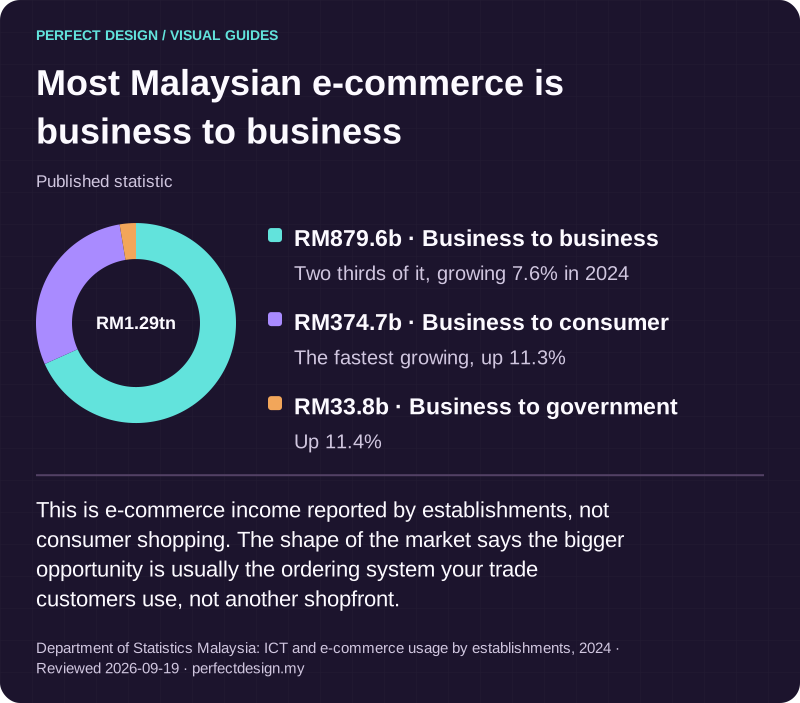
Most Malaysian e-commerce is business to business
Published statistic. This is e-commerce income reported by establishments, not consumer shopping. The shape of the market says the bigger opportunity is usually the ordering system your trade customers use, not another shopfront.
Source: Department of Statistics Malaysia: ICT and e-commerce usage by establishments, 2024. Reviewed .
Read the graphic as text
RM1.29tn
- Business to business: RM879.6b. Two thirds of it, growing 7.6% in 2024
- Business to consumer: RM374.7b. The fastest growing, up 11.3%
- Business to government: RM33.8b. Up 11.4%
Which of these do you need?
Tell us the combination and we'll build a free working prototype of it for your business.