What the scope has to resolve before design starts
Business website, company website and corporate website usually describe the same job: give the people who matter to your business enough to decide, then make the next step obvious. The scope decision runs in a sequence. Who are the audiences and what is each one deciding. Which claims can you actually stand behind. Who owns the content, the facts and the systems once we hand over. Which pages are genuinely needed. And what happens to an enquiry after someone sends it.
Platform comparisons, online checkouts and application architecture sit outside this page. They are real decisions, just later ones, and they change depending on what this scope concludes.

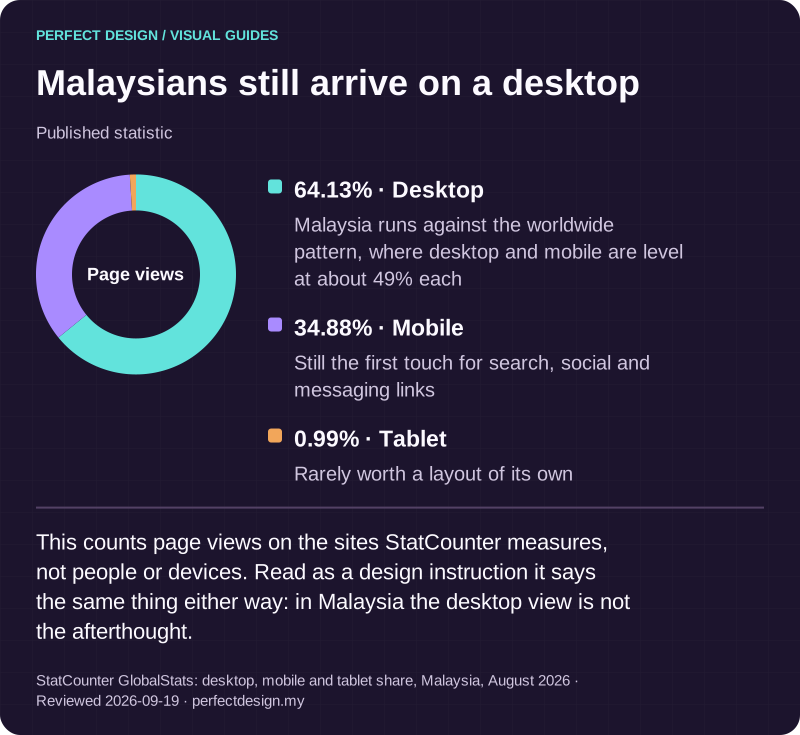
Malaysians still arrive on a desktop
Published statistic. This counts page views on the sites StatCounter measures, not people or devices. Read as a design instruction it says the same thing either way: in Malaysia the desktop view is not the afterthought.
Source: StatCounter GlobalStats: desktop, mobile and tablet share, Malaysia, August 2026. Reviewed .
Read the graphic as text
Page views
- Desktop: 64.13%. Malaysia runs against the worldwide pattern, where desktop and mobile are level at about 49% each
- Mobile: 34.88%. Still the first touch for search, social and messaging links
- Tablet: 0.99%. Rarely worth a layout of its own
Start with stakeholders, not a company profile
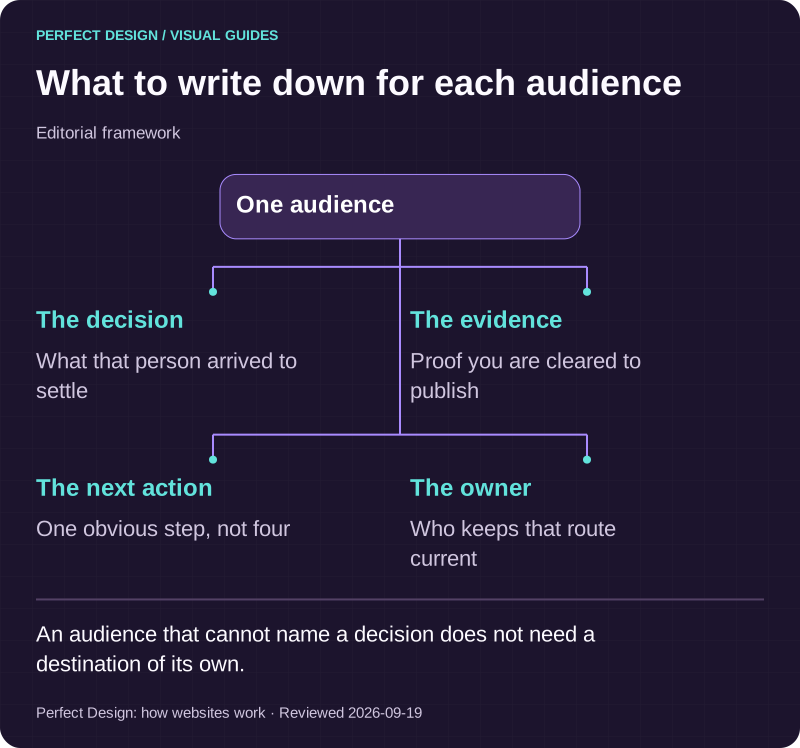
The weakest business websites are organised around the company: who we are, what we do, our vision. The strongest are organised around the people arriving and the decision each one is trying to make. So the first job is an inventory. For each audience, write down the decision they are making, the evidence they need to make it, and the action they should take next.
Most businesses have one decision that dominates, usually a buyer deciding whether you can handle their problem. Start there and keep that route clean. Add investor, careers, media or regulatory routes only when a distinct audience genuinely needs its own destination, someone is accountable for keeping it current, and the evidence behind it is approved. A stakeholder route with no owner goes stale within a year and quietly damages the credibility the rest of the site is building.
Map each audience to a journey
Take one audience at a time and follow it through. A procurement lead at a manufacturer lands on a service page. They need to know you have handled something of similar shape and scale, so they look for proof. They find a project that resembles theirs, read what was actually delivered, and want to ask a question. The enquiry form has to capture enough for someone at your end to answer properly, and it has to reach a person who can.
| Step | Who acts | What the site should do | Exception | Evidence to collect before sign-off |
|---|---|---|---|---|
| Identify the primary audience | Owner or marketing lead | Give the dominant audience a clear route from landing to enquiry | Two audiences need incompatible actions on the same page, so split the route or defer one | A written list of audiences, their decisions and their next actions |
| Review proposed proof | Marketing lead with the approver | Show only claims and projects cleared for publication | A project is commercially sensitive or permission has not been granted, so it is described generically or held back | Written approval per claim, with the wording that was approved |
| Approve the content | Named approver | Carry the approved wording into the page without drift | Legal or a client contact changes wording after design, so the page is updated before launch | A dated record of which version was approved |
| Route an enquiry | Enquiries owner | Collect the context an answer needs and deliver it to an accountable person | The enquiry names an unconfirmed integration or a regulated requirement, so it escalates instead of getting a generic reply | A test enquiry that arrives, is acknowledged and is answered |
| Decide on extra stakeholder routes | Owner | Add investor, careers or media destinations only when each has an owner and approved evidence | No one can maintain the route, so it is deferred rather than launched thin | A named owner and a review trigger per route |

What to write down for each audience
Editorial framework. An audience that cannot name a decision does not need a destination of its own.
Basis: Perfect Design: how websites work. Reviewed .
Read the graphic as text
One audience
- The decision. What that person arrived to settle
- The evidence. Proof you are cleared to publish
- The next action. One obvious step, not four
- The owner. Who keeps that route current
Turn approved facts into credible proof
Trust on a business website comes from specifics you can substantiate, not adjectives. The practical tool is a small register. For each claim, record the claim itself, where the evidence comes from, whether you have permission to publish it, who owns it, what would trigger a review, and whether the exact wording has been approved. Anything without a source, a permission or an owner gets omitted, qualified or deferred. It does not get published and fixed later.
Separate what you deliver from what the client got
There is a meaningful difference between describing what you build and claiming a business outcome. "We built a dealer portal with order tracking and parts enquiry" is a description you can support by showing the thing. "We increased their sales by forty per cent" is an outcome claim that needs the client's agreement and real figures behind it. Business websites get into trouble on the second kind. When the source, the permission or the owner is unclear, leave it out.
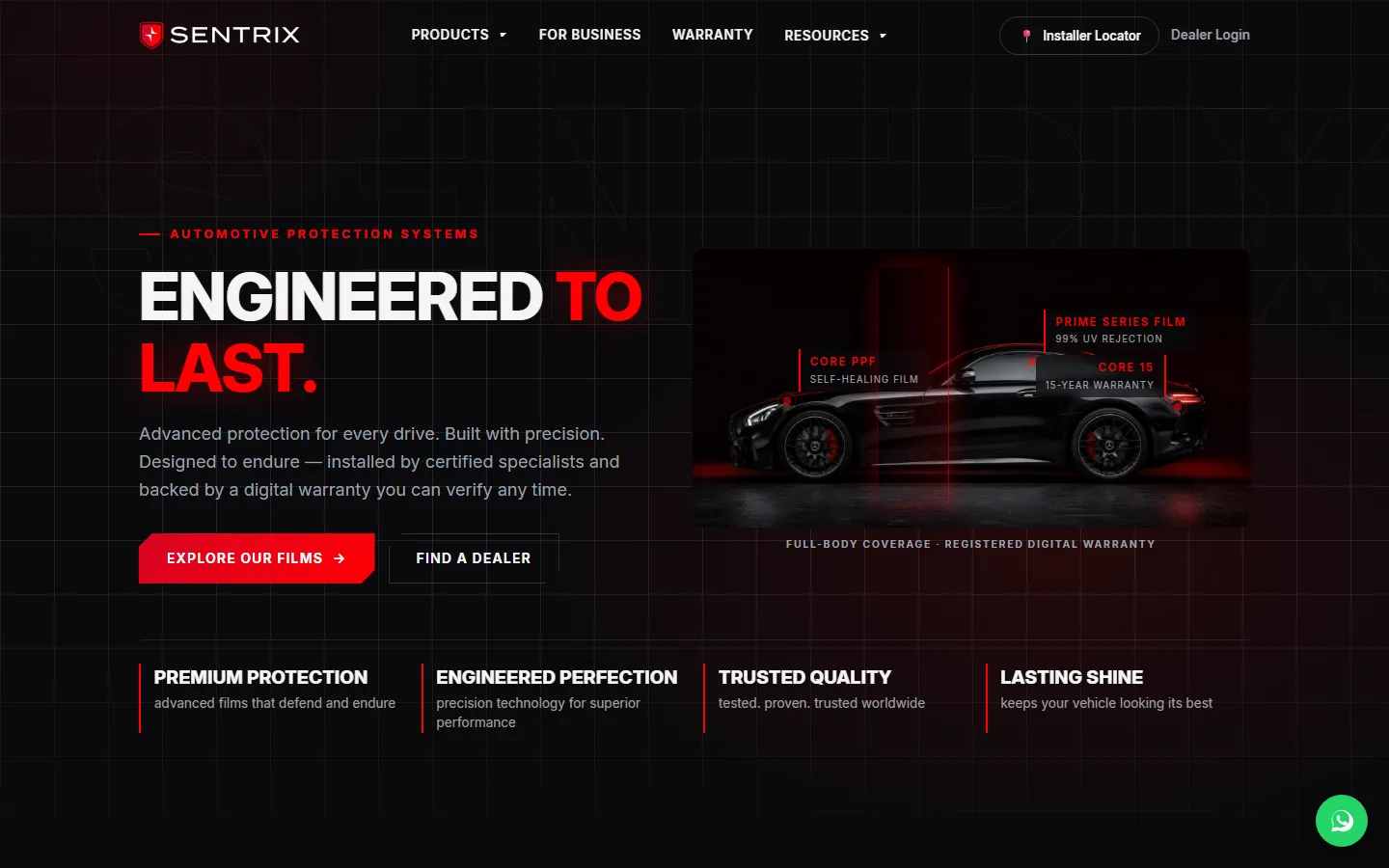
Our own Orialis Group build is a concept prototype rather than a client engagement, and it is labelled that way everywhere it appears. It is useful here because it demonstrates the corporate shape: an investor centre, a newsroom and media desk, a careers surface and a group narrative that connects several businesses. Sentrix Auto is real client work, and the difference in how each is described is deliberate.

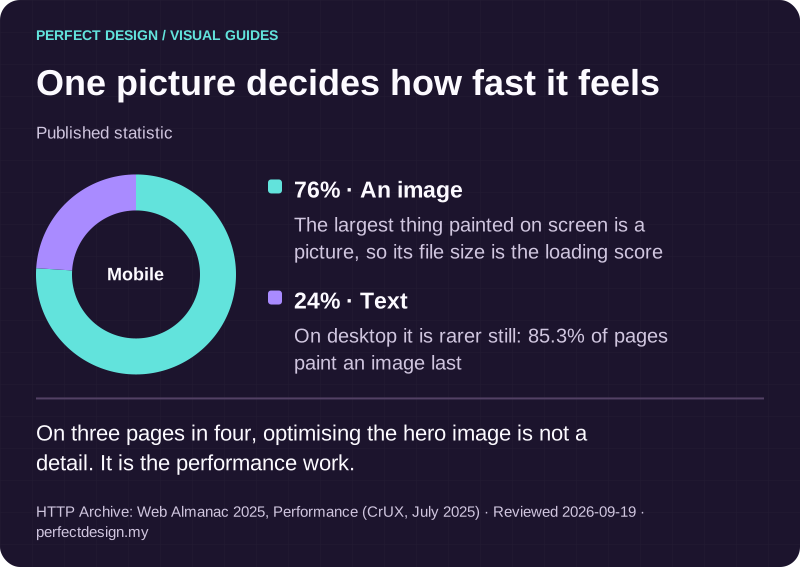
One picture decides how fast it feels
Published statistic. On three pages in four, optimising the hero image is not a detail. It is the performance work.
Source: HTTP Archive: Web Almanac 2025, Performance (CrUX, July 2025). Reviewed .
Read the graphic as text
Mobile
- An image: 76%. The largest thing painted on screen is a picture, so its file size is the loading score
- Text: 24%. On desktop it is rarer still: 85.3% of pages paint an image last
Assign ownership, systems and acceptance
Governance sounds heavy for a company website, but it comes down to naming people. Who edits content. Who approves a factual claim. Who holds technical access. Who decides on analytics and integrations. Who an unusual request escalates to. Four categories of work then become easy to route: routine care, content changes, new features and larger upgrades.
Systems, accessibility and acceptance
Any integration depends on things outside the website: the systems involved, their interfaces, who has permission, whether the data is clean enough, and what the third party's terms allow. Those are worth confirming before they appear in a scope rather than after. On accessibility, the W3C's own guidance treats it as an ongoing programme rather than a launch task: build understanding across the team, give someone responsibility, monitor it, involve the people affected, and revisit the work as the site changes.
Acceptance is a set of checks still to be run, not a badge. Verify the routes work, the permissions are right, the error states behave, and an accessibility review has actually happened. None of those are results you can claim in advance, which is exactly why they belong in the scope as agreed checks.
Measures and handover
Keep four things apart: whether the website was accepted, whether a connected workflow was accepted, what search measurement shows over time, and what ongoing care covers. Practical handover evidence is unglamorous and specific. Approved content. Working destinations. A test enquiry that arrived. Routing records. Accessibility review notes. A measurement baseline taken before launch so later numbers mean something. Which of these apply depends on what was actually agreed.

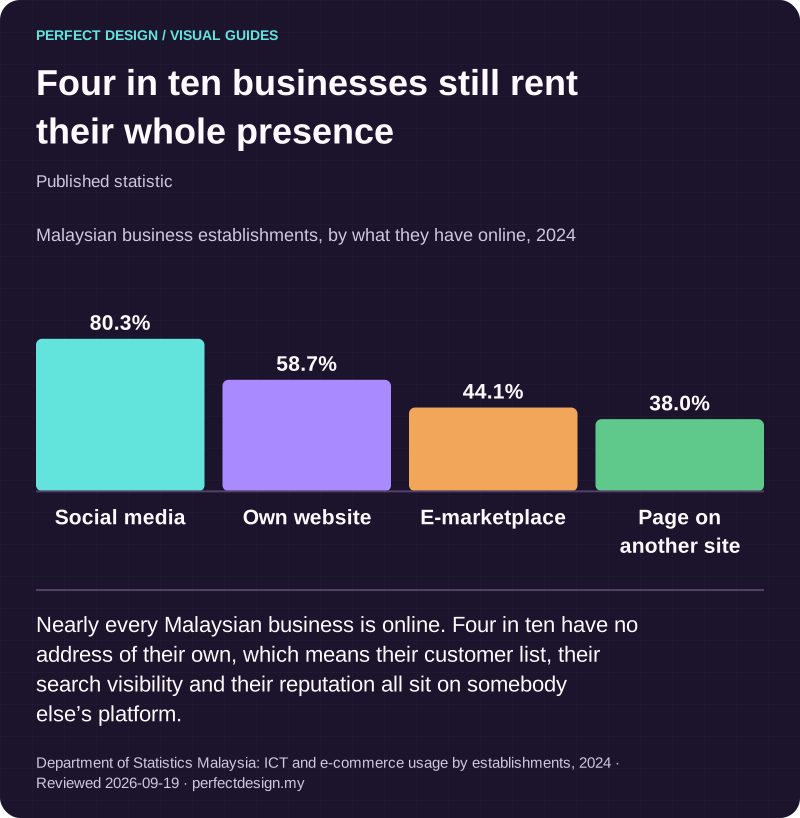
Four in ten businesses still rent their whole presence
Published statistic. Nearly every Malaysian business is online. Four in ten have no address of their own, which means their customer list, their search visibility and their reputation all sit on somebody else’s platform.
Source: Department of Statistics Malaysia: ICT and e-commerce usage by establishments, 2024. Reviewed .
Read the graphic as text
- Social media: 80.3%.
- Own website: 58.7%.
- E-marketplace: 44.1%.
- Page on another site: 38.0%.
Chart scale: Malaysian business establishments, by what they have online, 2024.
The smallest useful set of pages
For most service businesses the baseline is short: clear information about what you offer, proof you are allowed to show, enough organisational context to seem real, a contact route that suits the audience, and any supporting destination that particular decision needs. Local details such as an address, service area, currency or language are included when they matter to the audience and have been verified, not as a default.
Designing the enquiry handoff
A good enquiry makes five things clearer: what the person wants to change, who it affects, where things stand now, what they already use, and any constraint you should know about. Then it has to reach an accountable owner, get acknowledged, and follow an exception path when it raises something unconfirmed, such as an integration you have not built or a regulated requirement. Test that path before launch and keep the record.
Focused SME site or full corporate group?
The honest answer depends on audiences, evidence, owners and requirements rather than headcount. When one audience decision dominates, and you have approved proof, an accountable enquiry owner and clear requirements, a focused enquiry route is usually the right starting point. It needs good offer information, appropriate proof, organisational context and a solid enquiry handoff, plus only the supporting pages that decision actually needs.
Additional stakeholder routes become worthwhile when distinct audiences need their own maintained destinations, the evidence behind them is approved, someone owns each one, and the next action differs meaningfully per audience. An investor centre, a newsroom, a careers surface and a group narrative each add real work: content ownership, approvals, navigation, keeping destinations current and extra acceptance checks. That is the trade, and it is worth making deliberately.

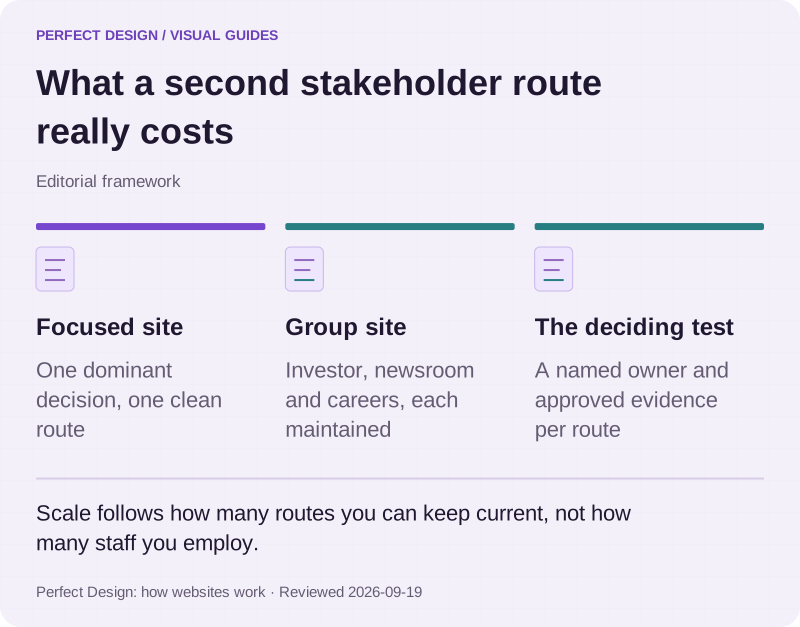
What a second stakeholder route really costs
Editorial framework. Scale follows how many routes you can keep current, not how many staff you employ.
Basis: Perfect Design: how websites work. Reviewed .
Read the graphic as text
- Focused site. One dominant decision, one clean route
- Group site. Investor, newsroom and careers, each maintained
- The deciding test. A named owner and approved evidence per route
Applying this to your project
Bring the audience list, whatever proof you believe you can publish, and the name of whoever approves a factual claim. That is enough for a useful first conversation. We will tell you where the scope looks thin, what we would need confirmed before it could be built, and which parts are better left to a second phase.