Moderation is the whole problem
Profiles, posts, a feed, notifications and maybe messaging is a known piece of software, and you will recognise it immediately because every community product looks broadly the same. None of it is what makes a community work or fail. That is the part nobody puts in a brief: who reads a report, how quickly, against which rule, with what authority to act, and what the software does on its own while no human is available.
That is not only an operational preference. Apple's review guidelines require apps with user-generated content to filter objectionable material, provide a way to report offensive content with timely responses, block abusive users and publish contact information. Google Play requires members to accept your terms before they post, ongoing moderation, in-app reporting and blocking of both content and users, and safeguards so the way the app earns money does not reward bad behaviour. Play also states that apps which end up primarily hosting objectionable content are removed. Moderation is a listing condition, not a phase two.
Since this page tells you how to judge a build partner, here is what we bring. We build member systems with records, roles and admin tooling, which is the machinery a community actually runs on. A close example is VITALE, a direct-sales back office concept with member records, roles and an admin workspace, which is a member system rather than a community and we will not dress it up as one. What we bring is the machinery underneath, and the willingness to say when the operating side is not ready.

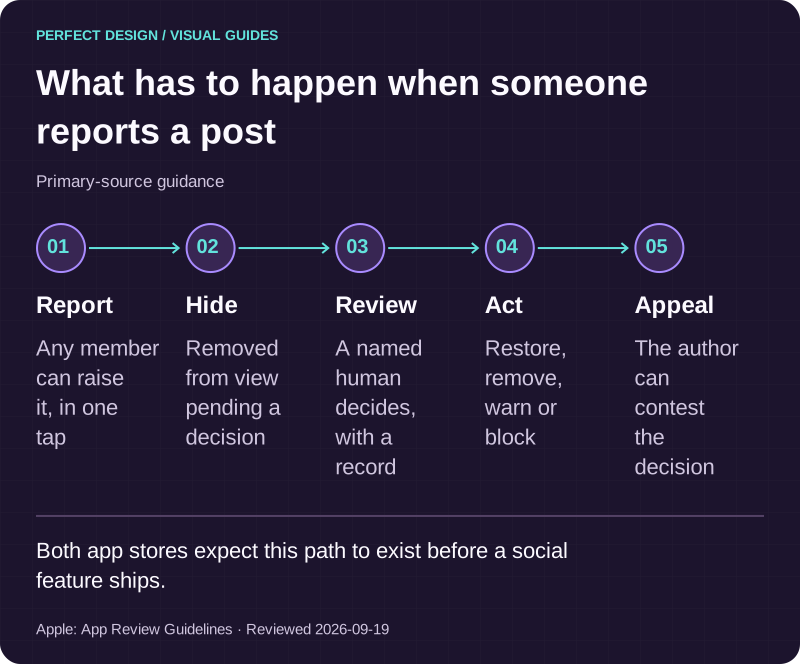
What has to happen when someone reports a post
Primary-source guidance. Both app stores expect this path to exist before a social feature ships.
Source: Apple: App Review Guidelines. Reviewed .
Read the graphic as text
- Report. Any member can raise it, in one tap
- Hide. Removed from view pending a decision
- Review. A named human decides, with a record
- Act. Restore, remove, warn or block
- Appeal. The author can contest the decision
What happens at three in the morning
Picture a report submitted at 03:12 by a member who has just been abused in a thread. Your one part-time moderator starts at nine. For six hours the content stays visible and the reporter assumes nothing was done. That scenario is ordinary, and it is the most useful thing to design against because it forces you to decide what the system does unattended.
- Hold the first posts from a new or unverified member for review, which slows abuse where most of it enters.
- Auto-hide content pending review once several distinct members report it, telling the author rather than removing it silently.
- Rate-limit posting, messaging and account creation, since coordinated abuse depends on volume.
- Close the riskiest surface overnight, such as direct messages, when nobody is on duty.
- Publish a response time you can keep, and have the acknowledgement say when a human will look.
Each has a cost. Automatic hiding can be weaponised by a group reporting someone they dislike, so record who reported what and let a moderator reverse it in one action. Holding new members slows genuine growth. Whatever you choose, the interface must not imply a decision when a report has only been received. That gap is where community trust is usually lost.

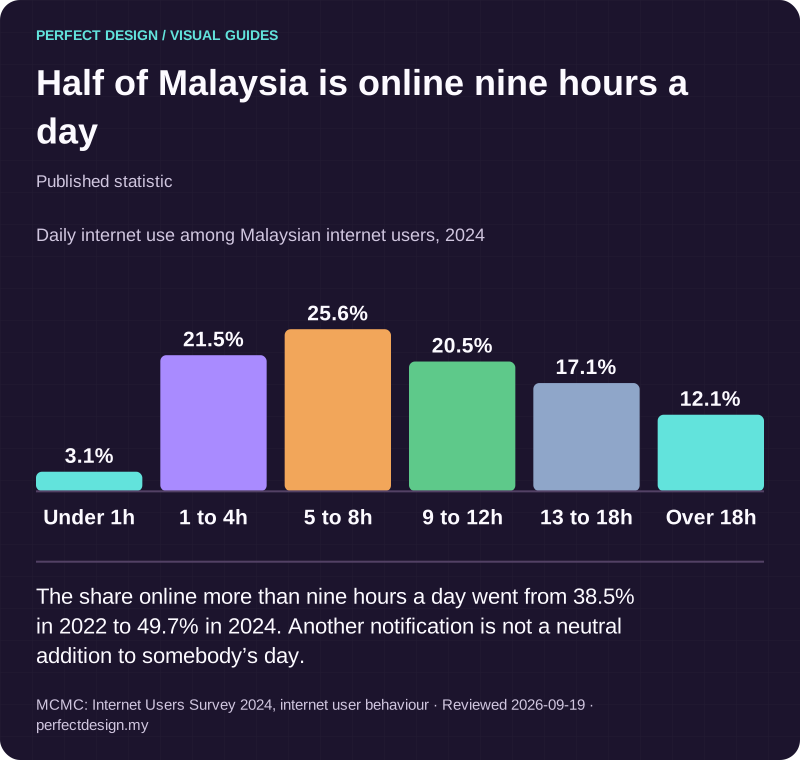
Half of Malaysia is online nine hours a day
Published statistic. The share online more than nine hours a day went from 38.5% in 2022 to 49.7% in 2024. Another notification is not a neutral addition to somebody’s day.
Source: MCMC: Internet Users Survey 2024, internet user behaviour. Reviewed .
Read the graphic as text
- Under 1h: 3.1%.
- 1 to 4h: 21.5%.
- 5 to 8h: 25.6%.
- 9 to 12h: 20.5%.
- 13 to 18h: 17.1%.
- Over 18h: 12.1%.
Chart scale: Daily internet use among Malaysian internet users, 2024.
Who can post, message, moderate and appeal
Write the roles down before the screens. A member has a state, usefully pending, active, restricted, suspended or removed, each answering a different question about what they may do today. A moderator can hide, remove, restrict and suspend, always with a recorded reason. An administrator manages roles, rules and escalation. An appeal owner reviews decisions and should not be whoever made the original call. Every action needs four answers: who may take it, what the member sees, what is recorded, and how it is reversed.
Direct messaging deserves its own decision. It is the highest-risk surface in any community because nobody else sees it, so abuse and scams run there first. If you ship it, you need blocking, reporting from inside a conversation, and an agreed position on whether staff may ever read a reported thread, written into the terms members accept rather than decided mid-incident. Plenty of communities are better off adding messages once moderation is proven.
Two kinds of permission get confused here. Android documents an application sandbox built on least privilege, where the manifest declares an app's components, permissions, minimum platform version and required device features, and the person holding the phone explicitly grants access to the camera or location. That is the device layer, and it says nothing about whether one member may edit another member's post. Role permission is yours, it lives on the server, and it must be enforced there even when the app looks like it prevented the action already.

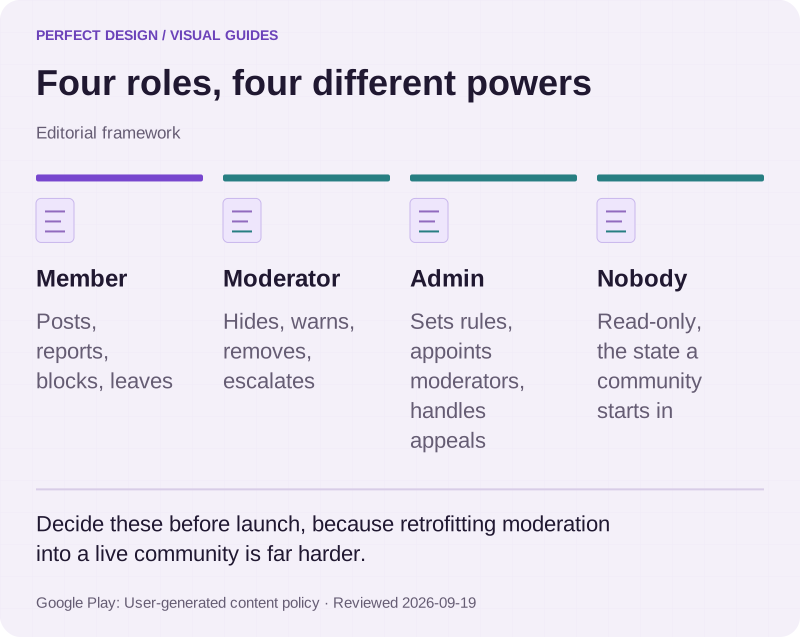
Four roles, four different powers
Editorial framework. Decide these before launch, because retrofitting moderation into a live community is far harder.
Basis: Google Play: User-generated content policy. Reviewed .
Read the graphic as text
- Member. Posts, reports, blocks, leaves
- Moderator. Hides, warns, removes, escalates
- Admin. Sets rules, appoints moderators, handles appeals
- Nobody. Read-only, the state a community starts in
Content states, media and the feed
Name the states a post moves through and who sees each one: draft, published, restricted, reported, under review, resolved and removed. Then decide the awkward cases in advance. Is removal silent, or is the author told and given a reason. What happens to replies under a removed post, since deleting them punishes people who did nothing. These are policy decisions with feelings attached, and they are cheaper to settle now than during an argument.
Media changes the economics. Text is cheap to scan, images are harder, and video is expensive to review and impossible to skim, which makes launching with text and images only a legitimate scope decision. Notifications need the same care. They are the reason people open a community app daily and the reason they delete it, so make them per-type, quiet at night by default, and unable to show reported content to the wrong person.

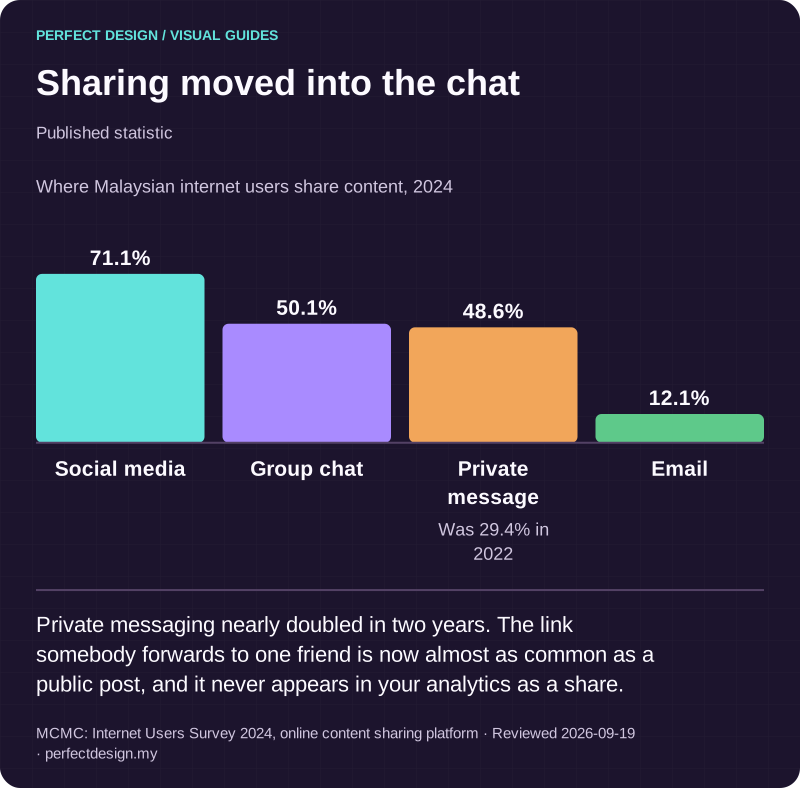
Sharing moved into the chat
Published statistic. Private messaging nearly doubled in two years. The link somebody forwards to one friend is now almost as common as a public post, and it never appears in your analytics as a share.
Source: MCMC: Internet Users Survey 2024, online content sharing platform. Reviewed .
Read the graphic as text
- Social media: 71.1%.
- Group chat: 50.1%.
- Private message: 48.6%. Was 29.4% in 2022
- Email: 12.1%.
Chart scale: Where Malaysian internet users share content, 2024.
A worked example: post, report, appeal
Take an invented professional members community where verified practitioners post questions and answers. The roles, rules and responses below are teaching assumptions.
| Workflow step | Assumed actor | Proposed system response | Exception | Acceptance evidence to collect |
|---|---|---|---|---|
| Create a post | Member | Permitted content publishes under the accepted rules, with author, time and visibility recorded | Restricted content or a failed upload stays unresolved rather than half published | Posting-state tests for a restricted member, a failed upload and a post held for review |
| Report or block | Member | The report reaches a queue with its context, the reporter learns what happens next, and blocking applies immediately | An acknowledgement is not a decision, and a burst of reports may be coordinated rather than valid | Report routing, reporter privacy and blocking observations, including what a blocked member still sees |
| Moderate and review an appeal | Moderator, then a separate appeal owner | The action, the reason and the rule applied are recorded, and the appeal goes to someone else | Nobody is on duty, or the evidence conflicts and the case is escalated | Decision history and role-access tests, including an out-of-hours case and a reversal |
Deletion, records and legal exposure
When members publish, your business is hosting what they wrote. Defamation, copyright infringement, personal information about someone who never agreed, scams, harassment and content involving minors are ordinary risks of running a community, and how they must be handled depends on your jurisdiction and sector. We are not lawyers and this is not legal advice. What the product can do is give your advisers something to work with: terms accepted at the point of posting, an evidence trail behind every decision, a monitored contact route, and takedown you can perform quickly and prove afterwards.
Deletion is the other half of that record. Apple requires an app supporting account creation to offer account deletion inside the app, and Google Play requires an in-app path to delete the account and its data, a web route to request the same, and a declaration of those practices in the Data safety form. Decide early what deletion means here: the account, posts others replied to, reports filed about that member, and any moderation record you may need for a dispute. Those are four decisions, and they belong in writing before the first request.
When a community app is the wrong build
If a group chat already carries the conversation and the complaint is only that it is messy, an app will not fix that and costs far more to run. If the community is small, a feed looks abandoned, and a quiet app reads as a failing business. If what you need is members logging in to see their own records, renewals or support history, that is a portal, and accounts and portals is the better starting point. The reasons to leave an existing platform are specific: identity you control, records you can keep, content structured enough to search, or membership tied to payment or eligibility.
What to bring
Useful first conversations start with the recurring member task, roughly how many members there are, what they may post, whether they message privately, who moderates and during which hours, and your position on retention and deletion. Bring what you have to the contact page and we will tell you which parts are ready, which need a decision first, and whether this should be a feature of something you already run. Mobile app development covers the platform, backend and testing decisions underneath it.